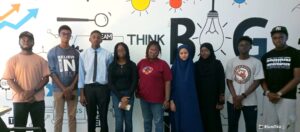
The African University of Science and Technology (AUST) has joined the UDARA Project, a continent-wide Artificial Intelligence learning initiative that also aims to set a new Guinness World Record for the largest online class ever conducted.The project, hosted by NSKAi in collaboration with AUST and several other universities across Africa, is designed to democratise access to AI education while encouraging cross-border collaboration among students, researchers and technology enthusiasts. The multi-day programme features daily online sessions and follow-up activities running through June, culminating in a major hackathon scheduled for 30 June 2026. Certificates of participation will be issued physically at AUST in September.The official opening ceremony was held on 14 May 2026 at the AUSTInspire Hub, the university’s innovation and technology incubation centre. Speaking on behalf of Professor Adebayo Badmus, Leader of the Centre of Excellence in Artificial Intelligence and Emerging Technologies (CEAET) at AUST, Mrs Abimbola Dawolu highlighted the transformative potential of the initiative.“The UDARA Project is not merely a series of online lectures,” Mrs Dawolu said. “It is an avenue for students and participants to collaborate meaningfully with their contemporaries across the African technology ecosystem. This aligns perfectly with AUST’s core vision of driving technology and inspiring innovation among our students while positioning them to compete globally.”She explained that AUST students, alongside participants from other institutions and external organisations, would take part in live online sessions, receive formal recognition for their participation, and be grouped into international project teams comprising learners from different African countries.At the centre of the initiative is an official attempt to break the Guinness World Record for the largest online class. Organisers hope to bring together tens of thousands of simultaneous learners from across Africa and beyond. If successful, the achievement would place African AI education firmly on the global stage and demonstrate the continent’s capacity to lead large-scale digital learning initiatives.Beyond the record attempt, the UDARA Project also places strong emphasis on practical application. The hackathon scheduled for 30 June will challenge multinational student teams formed during the project phase to develop AI-driven solutions to pressing African challenges.“The hackathon is where theory meets reality,” Mrs Dawolu added.AUST’s participation in the UDARA Project is the latest in a series of initiatives aimed at strengthening the university’s reputation as a hub for AI and emerging technologies in sub-Saharan Africa. The Centre of Excellence in Artificial Intelligence and Emerging Technologies (CEAET), under the leadership of Professor Badmus, has continued to drive curriculum innovation, industry partnerships and research commercialisation.The UDARA Project comes at a time when African governments, technology hubs and educational institutions are increasingly prioritising AI literacy. With the continent’s youthful population and expanding digital infrastructure, initiatives such as UDARA are viewed as critical to bridging the skills gap and reducing dependence on foreign AI solutions.In preparatory remarks released ahead of the opening ceremony, Professor Badmus stated: “Africa cannot afford to remain merely a consumer of AI technologies. We must become co-creators, innovators and ethical stewards of these technologies. The UDARA Project represents a significant step in that direction by leveraging scale, collaboration and healthy competition to ignite a continent-wide learning movement.”