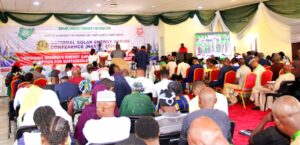
The push to bridge Nigeria’s electricity gap through solar energy, research, innovation and strategic investment took centre stage at the African University of Science and Technology (AUST), Abuja, as policymakers, researchers, industry leaders and renewable energy advocates gathered for the 43rd National Solar Energy Forum and Conference (NASEF 2026).
The event which took place from October 21 to 23, 2026, was organized by the Solar Energy Society of Nigeria (SESN) in collaboration with AUST.
The theme of the conference is, “Bridging Nigeria’s Energy Gap: Accelerating Solar Energy Adoption for Sustainable National Development.” and provided a platform for discussions on expanding electricity access, strengthening local manufacturing, attracting investment and developing the technical skills needed to advance Nigeria’s renewable energy sector.
In his opening remarks, the Chairman of the National Organising Committee of the conference, Dr. Segun Adaju, emphasized that solar energy offers significant opportunities for energy security, job creation and economic growth. He called for stronger collaboration among government institutions, academia, financial institutions and private sector operators to translate research and innovation into practical solutions.
Welcoming participants on behalf of the University, the President of AUST, Professor Azikiwe Peter Onwualu, FAS, highlighted the institution’s commitment to research, innovation and industry-focused education.
He showcased the University’s AUSTInspire Innovation Hub and its research centres, which support scientific development and the commercialisation of research findings.
Professor Onwualu also disclosed that AUST had been selected as a beneficiary of an African Development Bank-funded project, implemented by the Rural Electrification Agency (REA), to host a five-megawatt solar power installation on campus. Beyond improving electricity supply to the University and surrounding estates, the proposed facility is expected to serve as a practical training and research resource for students and researchers working on batteries, solar cells and related technologies.
The Chairman of the occasion, Professor Emeritus C.O. Iloeje, commended the Society’s longstanding contribution to renewable energy development in Nigeria. He called for renewed attention to incentives for solar equipment imports and local manufacturing, as well as stronger collaboration between the Energy Commission of Nigeria and the REA to update studies on the economic viability of renewable energy solutions for rural communities.
In his address, the President of SESN, Dr Sunny Akpoyibo, stressed the importance of research-driven investment, international partnerships and capacity development in accelerating the country’s energy transition. He identified solar deployment, renewable energy financing, energy storage, artificial intelligence, local manufacturing, policy development and youth empowerment among the key areas requiring sustained attention.
Dr Akpoyibo also announced the Society’s commitment to organising free post-conference renewable energy training for young people, with plans to extend the initiative across Nigeria’s six geopolitical zones, subject to available support. He further pledged that women would account for 60 per cent of sponsored participation in the proposed training programme.
Representing the Director-General of the Energy Commission of Nigeria, Dr Baba Ganatella, Director of Renewable Energy, outlined the Commission’s policy direction towards Nigeria’s net-zero emissions target for 2060. He highlighted the importance of coordinated energy planning, research, quality standards, technical skills and collaboration among government, academia and industry to increase solar adoption and reduce dependence on fossil fuels.
In her keynote address, Senator Uche Ekwunife, CON, further highlighted the relationship between reliable energy, national security, employment and economic development. Senator Ekwunife called for more effective implementation of existing energy policies, improved financing and streamlined approval processes for mini-grid projects to accelerate decentralised electricity provision, particularly in underserved communities.
The conference also brought together international renewable energy representatives, government agencies, academic institutions, industry professionals and development partners to exchange knowledge and explore opportunities for collaboration. Special SESN Fellowship awards were also scheduled for distinguished honourees, including former First Lady of Nigeria, Her Excellency Hajiya Maryam Sani Abacha, and His Royal Highness Alhaji Mohammed Sabo Abdulkadir, the First Emir of Giade Emirate, Bauchi State.
The forum reaffirmed the importance of sustained partnerships between government, research institutions and industry in building a reliable, affordable and sustainable energy system for Nigeria.