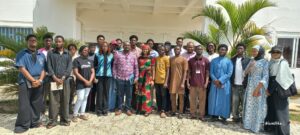
The African University of Science and Technology (AUST) officially launched its Esports Club at an event organised by the university’s African Esports and Digital Innovation Centre (AEDIC) at the NMI Auditorium. The event focused on educating the AUST community about global esports careers, economic opportunities, and pathways through which students can build professional futures within the $200 billion global gaming industry.While the words “esports” and “gaming” may often bring to mind images of teenagers glued to screens, the message delivered throughout the event was clear: esports is about careers, research, innovation, and Nigeria’s place within a rapidly growing global digital economy.Dr Chukwuemeka Uwanaka, AEDIC Centre Leader, opened the seminar with a warm welcome and expressed gratitude to the President of AUST, Prof. Peter Azikiwe Onwualu, FAS, for his leadership and continued support. He then outlined AEDIC’s ambitious vision, which extends far beyond casual gaming.According to Dr Uwanaka, the Centre plans to establish a functional Esports Laboratory at AUST — a dedicated space for gaming, game design, game development, and esports research. Beyond this, AEDIC aims to integrate the AUST community into the global esports ecosystem by creating structured pathways for students to compete, create, and collaborate across continents.Mr Ikechukwu Okoye, a technology enthusiast and Board Member of the Esports Federation of Nigeria (EFN), delivered a seminar titled “Global Esports: Careers, Economic Opportunities and Pathways.” His presentation was both enlightening and highly practical.Okoye highlighted Nigeria’s unique advantages, including its population of over 220 million people — one of the youngest populations in the world — a rapidly expanding technology ecosystem anchored by Yaba Valley, and widespread mobile penetration that has produced a gaming-native generation.“The question is not whether Nigeria will develop a world-class esports ecosystem,” Okoye stated. “It is how quickly.”Addressing students who questioned whether gaming could translate into viable employment opportunities, Okoye outlined several emerging digital career paths, including streaming, content creation, esports casting, esports analysis, coaching, and operations management.He also highlighted numerous opportunities available to the AUST community, including scholarships for esports-related academic programmes in Norway, South Africa, the United States, and other countries; participation in international esports tournaments representing AUST and Nigeria; exchange programmes with the University of Agder in Norway, Stellenbosch University, and other global partners; as well as research opportunities in esports science, game studies, and artificial intelligence in gaming.“The creator economy is real, and students at AUST can begin building global careers from today,” Okoye emphasised.The highlight of the event was the official launch of the AUST Esports Club. The club is open to all students, faculty members, and staff, and will serve as the university’s hub for gaming, game design, development, and esports research.